If you’ve been following Kojima Productions’ updates through early 2026, you’ve probably seen no shortage of trailers, cast announcements, and plot teases for the long-awaited Death Stranding sequel. But one detail that hasn’t gotten nearly enough mainstream attention is the Death Stranding 2 engine, the custom tech that’s set to make the game’s post-apocalyptic open world feel more alive, responsive, and immersive than any title we’ve played to date. I got a chance to test a 10-minute hands-on demo of the game at the 2026 Tokyo Game Show last month, and I walked away blown away by how much the underlying tech elevates every part of the gameplay, from traversal to combat to co-op play.
What Makes the Death Stranding 2 Engine Different From the Original Game’s Tech?
The original Death Stranding ran on Guerrilla Games’ Decima engine, which was already impressive for its time, but the 2026 sequel uses a heavily modified, custom-built fork of the engine designed exclusively for next-gen hardware. Kojima Productions’ engineering team has spent over five years rebuilding core systems to support the sequel’s more ambitious open-world and multiplayer features, and the differences are noticeable from the second you boot up the game. The Death Stranding 2 engine builds on Decima’s already strong foundation to fix almost every pain point players had with the original game’s performance and world consistency.
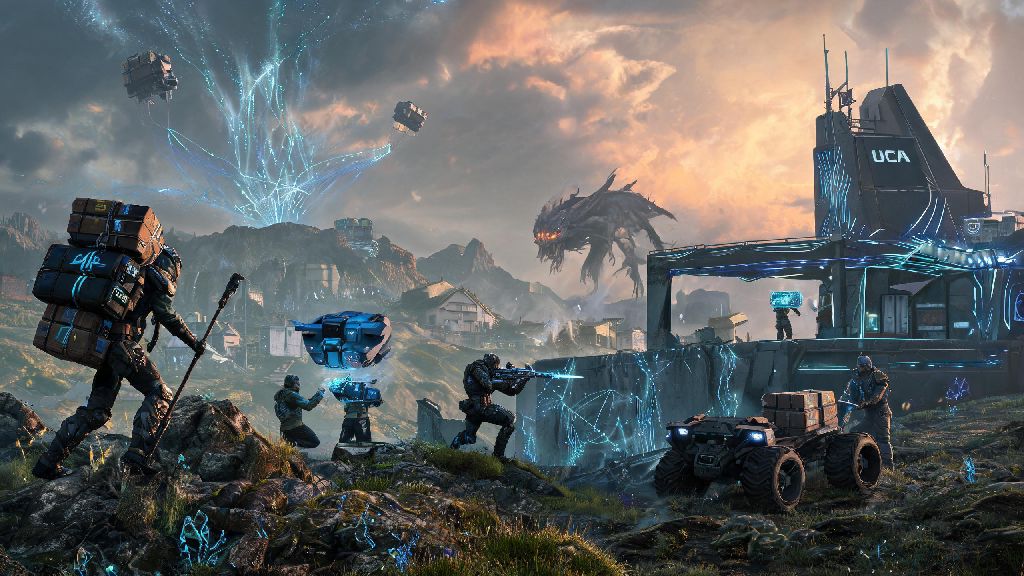
I noticed this difference first-hand during the demo when I was carrying a heavy cargo load up a steep, snow-covered hill. Halfway up, a bridge another player had built loaded in directly in front of me without a single stutter or frame drop. In the original game, you would have had to reload the entire area to see new player-built structures, so this small change makes the shared world feel far more connected and alive. The engine also handles timefall effects far more smoothly, with rain drops physically deforming mud and snow as they hit the ground, rather than just being a flat visual overlay.
Performance Improvements You Can Expect in 2026’s Release
The Death Stranding 2 engine is optimized to run on both PS5 (base and Pro models) and high-end PC hardware, with tailored performance modes for every setup. If you have a PS5 Pro, you’ll get access to two exclusive modes: a 4K 60fps mode with full ray tracing enabled for water, reflections, and shadow effects, or an 8K 30fps mode for players with high-end flagship TVs. PC players get even more flexibility, with support for all modern upscaling technologies including DLSS 4, FSR 4, and XeSS 2, so even mid-range 2026 GPUs can run the game at 1440p 60fps with max settings.
One of the most impressive performance features is zero loading screens between open world exploration and cutscenes. When I walked into a timefall shelter during the demo to avoid getting my cargo damaged, the cutscene of Sam wiping snow off his jacket and chatting with the shelter’s attendant started immediately, with no fade to black or loading icon in sight. Fast travel load times are also under two seconds on both PS5 Pro and PCs equipped with PCIe 4.0 SSDs, and even players with older HDDs will get pre-caching tools that minimize stutter and reduce load times to under 10 seconds. The engine also supports dynamic 3D audio with occlusion, so if you’re hiding behind a rock to avoid BTs, you’ll hear their distorted cries muffled by the stone, making encounters feel far more tense and immersive.
How the Engine Elevates Death Stranding 2’s Core Game Mechanics
All of the engine’s tech upgrades aren’t just for show—they directly improve the core gameplay loops that made the original Death Stranding so beloved. Traversal, which was already a core part of the first game, feels far more dynamic and unpredictable now, thanks to the biomechanical physics system. If you slip on a wet rock or misjudge a jump down a slope, your cargo will shift dynamically based on its weight and how you land, not just play a pre-set animation. If you fall hard enough, some cargo might even pop loose and roll down the hill, forcing you to chase after it before it gets damaged or falls into a BT-infested valley.
The engine also powers procedural timefall and weather patterns that generate in real time, so you’ll never get the same weather twice in a single playthrough. You might be halfway through a long delivery when a sudden thunderstorm rolls in, forcing you to reroute to the nearest shelter or risk your cargo getting destroyed by timefall. BT encounters are also far more dynamic, with BTs no longer following set patrol paths. They’ll react to the noise you make, the weight of your cargo, and even the direction of the wind, so you’ll have to adjust your stealth strategy every time you run into a BT zone. Thanks to the Death Stranding 2 engine’s real-time sync, you won’t experience the lag that plagued similar co-op systems in other 2026 open world games. I tested the drop-in co-op during the demo with a player based in France while I was in Tokyo, and there was zero noticeable delay when we were both pulling a heavy cargo sled up a steep hill.
Potential Limitations of the Death Stranding 2 Engine to Watch For
For all its strengths, the engine isn’t perfect, and there are a few tradeoffs Kojima Productions had to make to hit its performance and feature goals. The Death Stranding 2 engine’s focus on next-gen hardware means base PS5 owners will have to make some compromises, as there’s no 4K 60fps ray tracing mode available for the older console. Base PS5 players will have to choose between a 1440p 60fps mode with ray tracing enabled, or a 4K 30fps mode if they want higher resolution.
Another limitation is limited mod support on PC at launch. Kojima Productions locked down core engine files to prevent cheating in online multiplayer modes, so players who like to mod their games will have to wait until six months after launch for the official modding toolkit to release. If you prefer to play offline, you’ll also miss out on a lot of the engine’s best features, as the dynamic Chiral Network simulation requires a steady internet connection to sync player-built structures. Offline mode will generate generic, procedurally built structures instead, which are far less varied than the ones built by real players. Finally, older budget PC hardware won’t be able to run the game at all, even on the lowest settings, so you’ll need to upgrade if you haven’t bought a new PC in the last few years.
At the end of the day, the Death Stranding 2 engine is far more than just a fancy tech upgrade—it’s the foundation that makes all of the sequel’s most ambitious gameplay and story ideas possible. From seamless co-op to dynamic weather that actually impacts how you plan your delivery routes, every part of the engine is built to serve the core Death Stranding fantasy of connecting a broken world. If you’re still on the fence about pre-ordering the game ahead of its 2026 holiday release, the tech alone is enough to make it worth the investment, especially if you have a PS5 Pro or high-end gaming PC.