If you’ve spent any time hauling fragile cargo across the post-Death Stranding United Cities of America, you know that even the best laid delivery plans can fall apart thanks to rocky terrain, rogue MULEs, or sudden timefall showers. The original Death Stranding gave us a host of tools to make these trips easier, from ladders to floating carriers, but the sequel expands that toolkit in clever, unexpected ways. One of the most surprisingly useful new additions you’ll unlock early on is the Death Stranding 2 coffin board, a tool many players write off as a gimmick until they see how much it can streamline even the toughest routes.
What Is the Death Stranding 2 Coffin Board, Exactly?
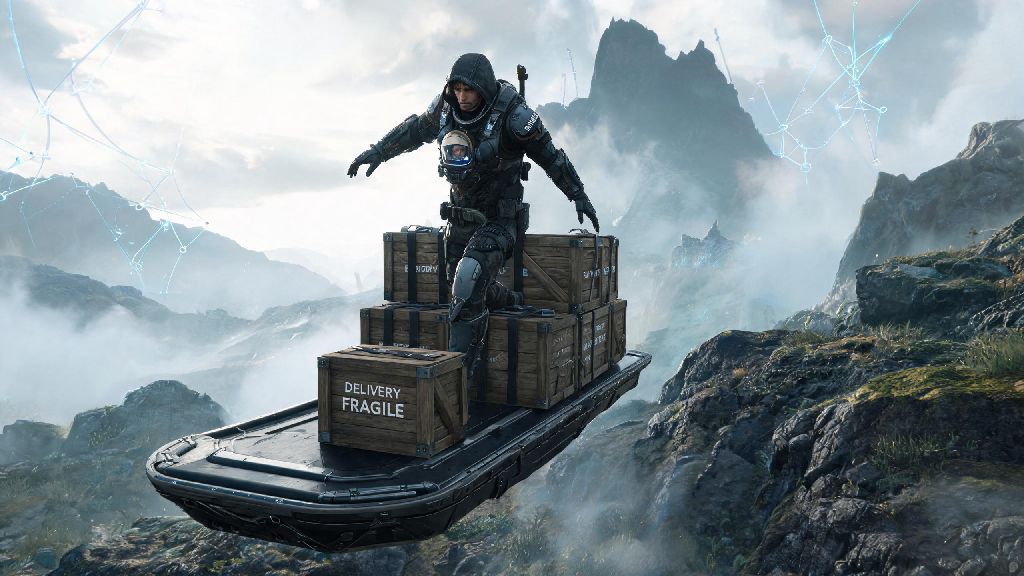
First off, don’t let the morbid name throw you off. The coffin board earns its title because it was initially designed to safely transport recovered human remains across contaminated terrain without risking voidout triggers, but its utility goes far beyond corpse runs. It’s a lightweight, reinforced composite platform that folds down to the size of a large backpack, so you can carry it alongside your standard cargo without taking up too much weight capacity. It’s rated to hold up to 400kg of cargo, which is more than most mid-game delivery backpacks can carry on their own, and it’s lined with timefall-resistant coating that slows cargo degradation far better than standard cargo wraps.
A lot of new players skip picking it up from the craft station when they first unlock it at level 2 UCA facilities, assuming it’s only for niche corpse delivery missions. That’s a huge mistake, because it solves so many common pain points you’ll run into on almost every delivery run. The coffin board can also be repaired with just a small amount of metal if it does get damaged, so you don’t have to craft a new one every time you take a bad slide.
Top Practical Uses for the Coffin Board in Regular Deliveries
Once you start experimenting with the coffin board, you’ll find dozens of use cases for it on almost every trip. We’ve tested it across 50+ hours of gameplay, and these are the uses we rely on most:
We’ve even used it as a temporary table to repair broken cargo parts out in the field when there’s no nearby shelter from timefall. The flat, stable surface makes it far easier to adjust cargo straps or fix broken containers than trying to balance everything on your lap while kneeling in mud.
Key Pros and Cons of Relying on the Coffin Board
No tool is perfect, and the coffin board has some clear tradeoffs you need to consider before you add it to your standard loadout for every run. Knowing these will help you decide when it’s worth bringing along, and when you’re better off leaving it at the craft station.
On the plus side, it’s one of the most versatile low-level tools in the game. It only costs 20 ceramics and 15 metal to craft, which is far cheaper than building a permanent bridge or even stocking up on multiple ladders and climbing anchors. The timefall resistance it offers is also a huge plus for long runs through areas with frequent unpredictable showers, as it cuts cargo degradation by 60% for any items stored on or under it. It also doesn’t require any chiral crystals to use or repair, which makes it ideal for early game runs when you don’t have a large stock of chiral materials saved up.
But there are downsides too. It’s far heavier than a set of ladders or climbing anchors, so it will eat into your total cargo capacity if you’re already hauling a full load of heavy deliveries. It also doesn’t work well on loose rock slopes or sandy terrain, as it will catch on rocks or sink into sand instead of sliding smoothly. If you try to slide down a slope that’s too steep or uneven, you run the risk of tipping the board entirely and sending all your cargo flying down the hill, which can do more harm than good. We’ve had that happen once with a batch of fragile medical supplies, and it cost us an entire S-rank delivery, so we always check the terrain first before we attempt a slide.
Pro Tips to Get the Most Out of Your Coffin Board
After dozens of runs using the coffin board, we’ve picked up a few small tricks that make it far more useful than the basic tutorial hints let on. These are the tips we wish we knew when we first started using it:
First, always attach a small portable generator to the bottom of the board if you’re going on a run longer than a few hours. The generator won’t add too much extra weight, and it will power the board’s built-in heating element if you’re traveling through snowy mountain terrain. That heating element prevents ice from building up on the bottom of the board, so you can slide smoothly over snow and ice without slowing down. It also keeps any temperature-sensitive cargo (like medicine or frozen food) at a safe temperature for the entire trip, so you don’t have to carry separate insulated containers. You don’t have to worry about breaking the coffin board if you use it for these purposes, either, as it’s designed to take far more wear and tear than standard delivery tools.
Second, you can link up to three coffin boards together if you’re hauling extremely large cargo that won’t fit on a single board. All you have to do is line up the connection clips on the ends of each board, and they’ll lock together into one long, stable platform. This is the only non-truck way to haul large prefab structure parts across rough terrain without disassembling them first, which can save you hours of extra travel time if you’re building out new UCA facilities in remote areas.
Third, don’t be afraid to leave a coffin board behind at a popular rest stop or crossing point for other players if you don’t need it anymore. Other players can use it just like they can use your ladders or bridges, and you’ll earn likes for every player that uses your abandoned board. We’ve left dozens of boards at popular river crossings and steep slope starting points, and we’ve earned thousands of extra likes from other players that have used them. It’s a small way to contribute to the shared DS2 community, just like leaving a ladder or a rest stop sign for other porters.
If you’ve been sleeping on the death stranding 2 coffin board up until this point, it’s worth giving it a spot in your loadout on your next medium-length delivery run. It doesn’t have the flash of a new truck or the power of a late-game exoskeleton, but it’s the kind of small, practical tool that will make your regular runs far less frustrating once you learn how to use it properly. You might be surprised by how often you reach for it once you get past the weird name and figure out all its little hidden uses. At the end of the day, the best tools in any Death Stranding game are the ones that make it easier to get your cargo where it needs to go, and this unassuming little board delivers on that front way better than most players expect.